GET INSIDETHE INDUSTRY

Inside SSS Defence: The Making of an Indian Gunmaker
Read Full Story ↗GETINSIDETHEINDUSTRY
TRM Industry Edition Archive

The Quest to Outsmart Time
A wearable clipped to the side of a commuter’s head in Mumbai is designed to do something no smartwatch attempts: measure blood flow to the brain in real time. That design choice sits at the centre of one of India’s most closely watched startup bets of 2026, and the entrepreneur behind it built his reputation on something far removed from neuroscience, getting biryani to the door in under 30 minutes. Deepinder Goyal, who built Zomato into a household name, has spent the last two years building something categorically different: not food, not delivery, but time itself. His new venture is Temple , and it sits inside a global obsession that has now firmly reached India: Longevity , a category researchers now size anywhere from roughly $30 billion to more than $740 billion depending on how tightly it is defined, and one where a single cellular-reprogramming funding round can now exceed $3 billion .
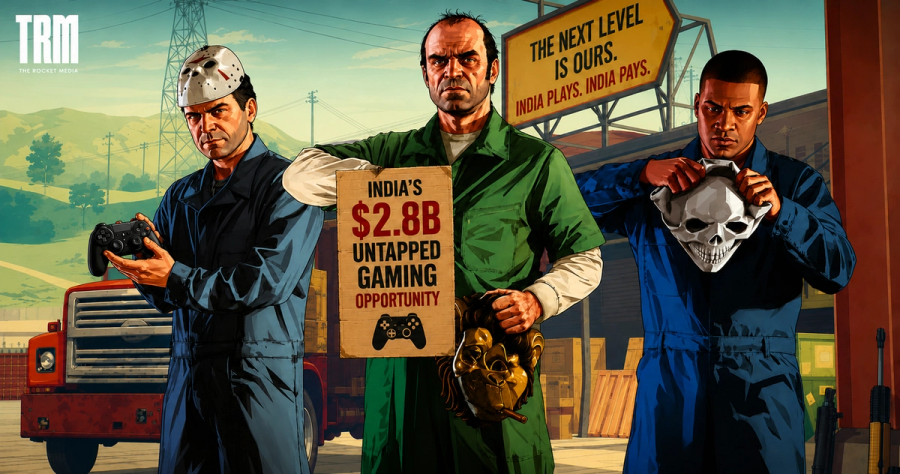
Gaming the world: The story of an untapped opportunity!
Three games that ruined my class 8th grades were as follows: GTA Vice City, Cricket 07 and Clash of Clans . I remember my dad bringing a computer for the first time at home when I was in class 6th, believing that it was the machine that every growing kid must be comfortable with. His beliefs regarding the machine were right, but regarding his son went terribly wrong within 2 years. When I gradually discovered that this box-like looking device has applications beyond paint, excel and html which my school teacher was teaching, there was no going back. By the middle of my class 8th I was spending most of my time after school on the computer playing the aforementioned games along with some lesser known games such as Freedom Fighters and Captain Claw . Now I have completed my college and my bachelors in economics has given me another OCD.
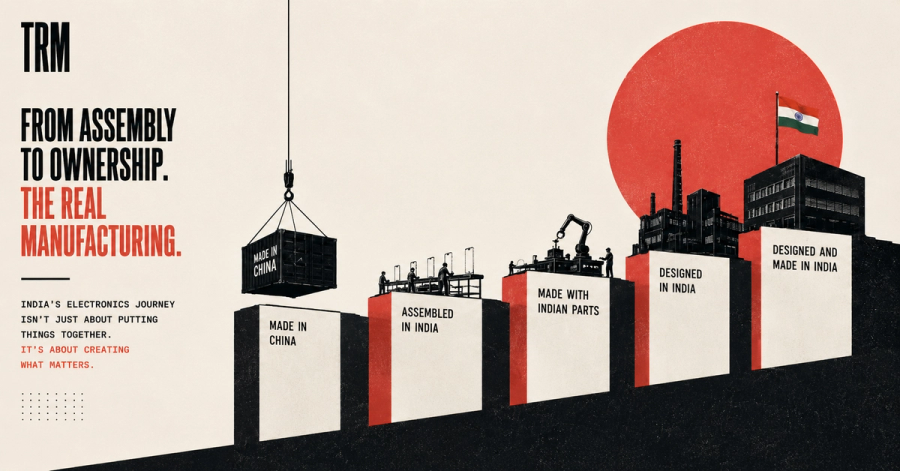
From Assembly to Ownership: India’s Electronics Endgame
I wanted to share something deeply personal with you. My childhood was ruined less by constant comparisons with the neighbour’s brilliant child and more by constant comparisons of India with China . Open the newspaper, switch on a news channel or listen to adults talk; China was everywhere. It had lifted hundreds of millions of people out of poverty, built extraordinary infrastructure, mastered technology and become the factory of the world. And China was not merely in the headlines. It was inside my house. The mouse and keyboard attached to our computer, the string lights we hung every Diwali, the calculator, the torch and the remote-controlled car carried the same three words somewhere at the back: “Made in China.” Even the phones that sounded proudly Indian: Micromax, Karbonn and Lava , often depended on Chinese designs, components and factories. They were Indian brands resting on a largely Chinese machine. Watching India repeatedly lose to its mighty neighbour felt really unsettling.
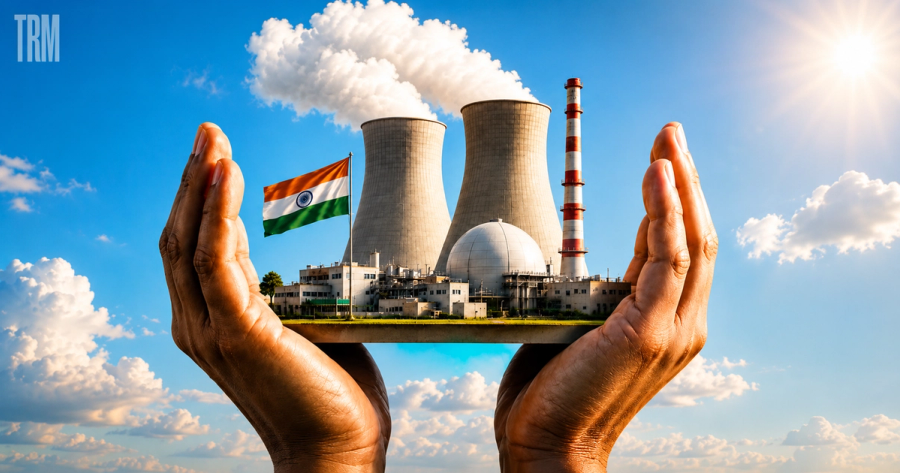
The Power of the Sun, in the Palm of a Startup: India’s Nuclear Garage
On August 14, 2026, a Bengaluru startup with a lean eight-person team tweeted a photograph of a doughnut-shaped machine and called it India’s first privately built tokamak. No press conference, no government ribbon-cutting, just a company called Pranos Fusion, quietly claiming to have done something only a handful of institutions on Earth have ever attempted outside a national lab. That single tweet captures something the SHANTI Act’s corporate RFPs and gigawatt targets don’t: India’s nuclear story is no longer only being written by the Nuclear Power Corporation of India or the conglomerates queuing up for Bharat Small Reactor licences. It’s increasingly being written in small labs, incubation cells, and university spin-offs betting that fission and fusion are now, for the first time, startup-shaped problems. Why a Garage Industry Is Suddenly Possible Nuclear energy has been a state monopoly in India since 1962 for a reason: fissile material is dangerous, and the barriers to entry; capital, expertise, land, licensing, were built to keep almost everyone out.
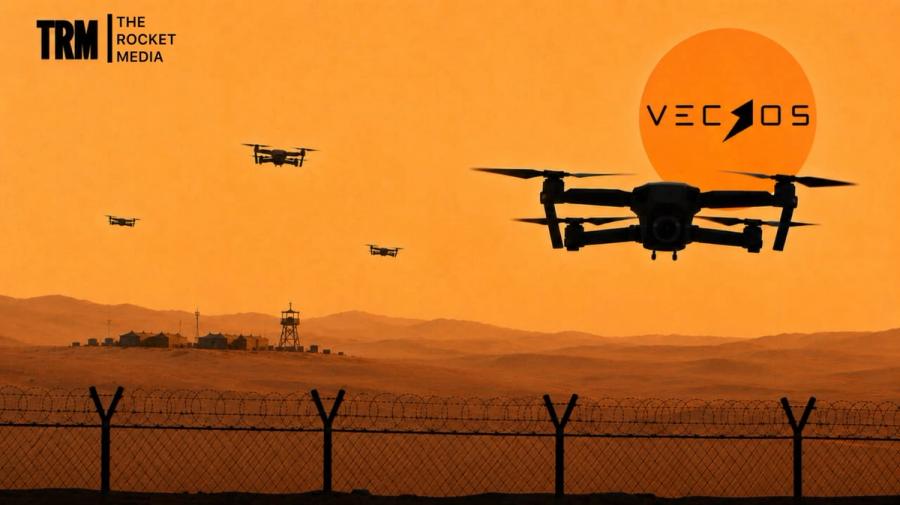
From RC Gliders to Level 4 Autonomy: The Engineering Story Behind Vecros
Across Baltic and Eastern European skies, electronic warfare has turned satellite navigation into contested territory. Satellites orbit roughly 20,000 kilometres above Earth, emitting delicate reference signals that ground-based interference can easily drown out or replace with a convincing lie. That is the operational difference between jamming and spoofing. Jamming blinds the machine; spoofing feeds it a fabricated reality. The consequences are no longer theoretical. Disrupted flight paths and rogue maritime navigation point to a systemic vulnerability across modern defence and industrial robotics. We have spent the last decade teaching machines how to act autonomously, but far less time asking what happens when the external world they rely on can no longer be trusted. That is where the next battle for deep-tech autonomy begins, and why Vecros matters: to keep machines on mission when the sky can no longer be trusted. If an autonomous system cannot rely on the sky, it must learn to perceive the ground.
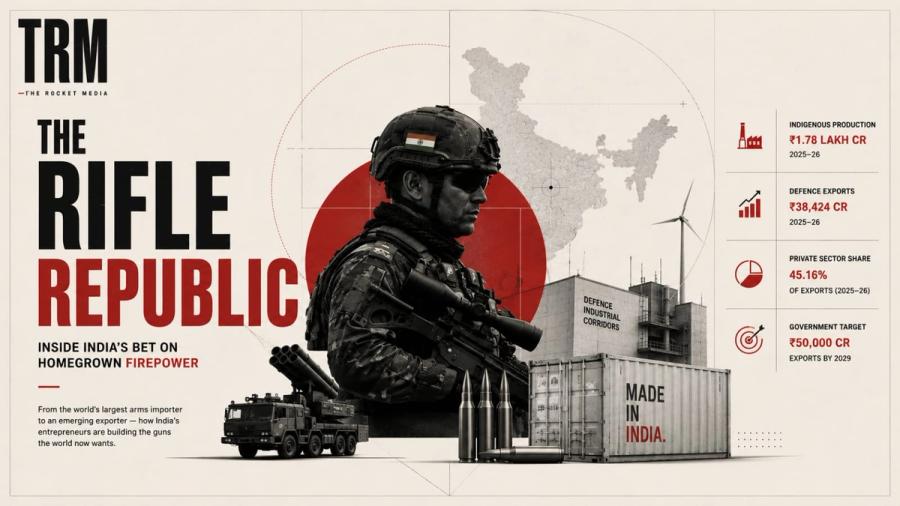
The Rifle Republic: Inside India’s Bet on Homegrown Firepower
A soldier in Armenia is now training with a sniper rifle designed not in Austria or Israel, but in a factory park on the outskirts of Bengaluru. That single fact would have been unthinkable a decade ago, when India, the world’s largest arms importer, could not reliably build a service rifle that its own infantry trusted. Today, a handful of private companies are exporting precision weapons to foreign militaries, the government is dismantling decades of state monopoly over ordnance, and a defence-industrial map that once had exactly one shape — public, slow, and import-dependent, is being redrawn by entrepreneurs who grew up nowhere near a cantonment. This is the story of that redrawing: how India’s small-arms sector went from cautionary tale to genuine export ambition, and who is actually building the guns. A Legacy of catching up India’s troubled relationship with its own small arms is well documented. For decades, indigenous rifle and light-weapons development moved at a pace that consistently lagged the threats soldiers actually faced, forcing repeated reliance on imports and stopgap fixes even as the country maintained one of the world’s largest standing armies.
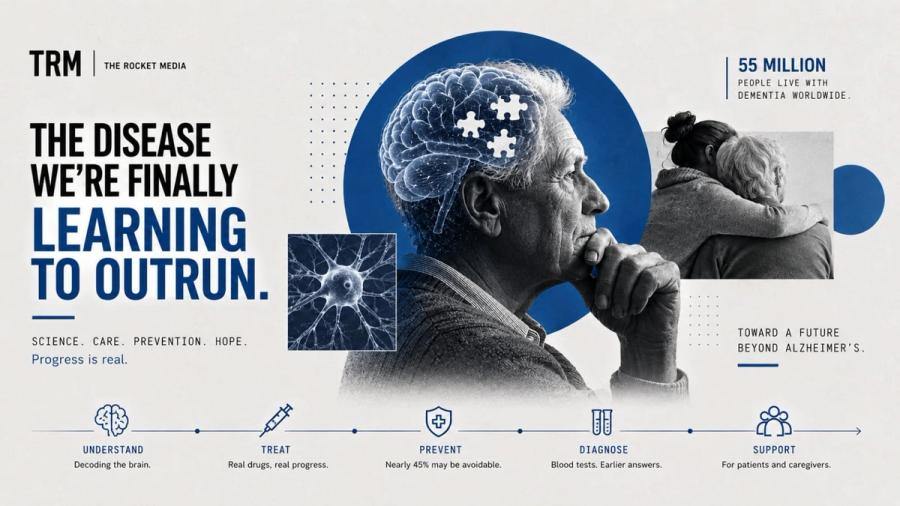
The disease we forgot to cure
Picture someone asking the same question four times in an hour. Not because they weren’t listening the first three times, but because by the time the answer finished, the question itself was already gone again. That’s Alzheimer’s in one sentence, before you get to any of the science. It doesn’t just take memories. It takes the ability to know you’re forgetting them. For most of the last century, an Alzheimer’s diagnosis meant one direction and one speed: down, and nobody could do much about either. That’s no longer fully true, and it’s worth saying plainly before getting into anything else. 55 million people are living with dementia worldwide right now, and Alzheimer’s causes roughly 60 to 70 per cent of those cases. In the US alone, 7.4 million people aged 65 and older have it in 2026 , and health and long-term care costs for Alzheimer’s and other dementias are projected to hit 409 billion dollars this year, not counting the unpaid caregiving that never shows up on an invoice.
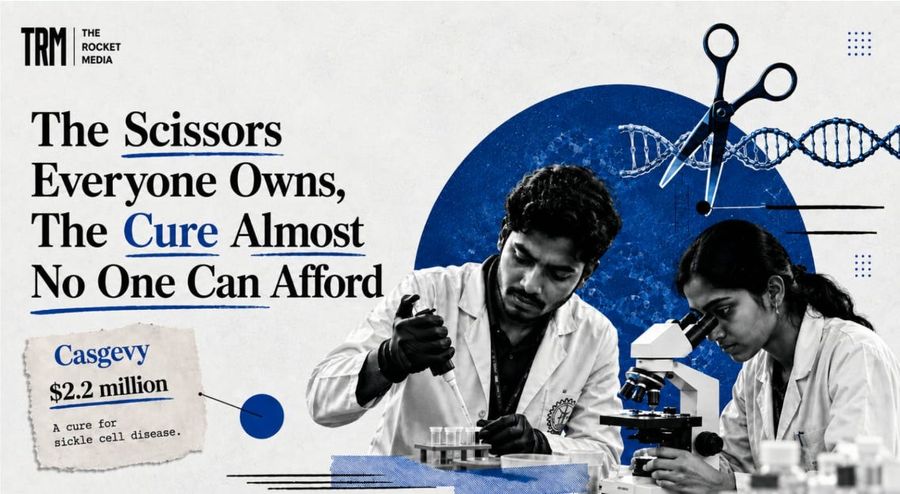
CRISPR: The upcoming panacea?
Somewhere in Boston right now, a sickle cell patient is walking around with edited DNA and a body they no longer need to fight. The treatment that made it possible, Casgevy, was approved by the FDA in December 2023. It is also the first time in medical history that a therapy lets you delete a disease instead of just managing it for the rest of your life. It also costs 2.2 million dollars. Sit with that number for a second, because that is really the whole article. We like to tell the story of CRISPR as a revolutionary story. A tool so cheap and so simple that any decently funded university lab can now do what used to require a decade and a Nobel-tier team. That part is true. But what nobody says out loud is that the technology getting cheap to make and the cure getting cheap to receive are two completely different things, and right now only the first one is true.
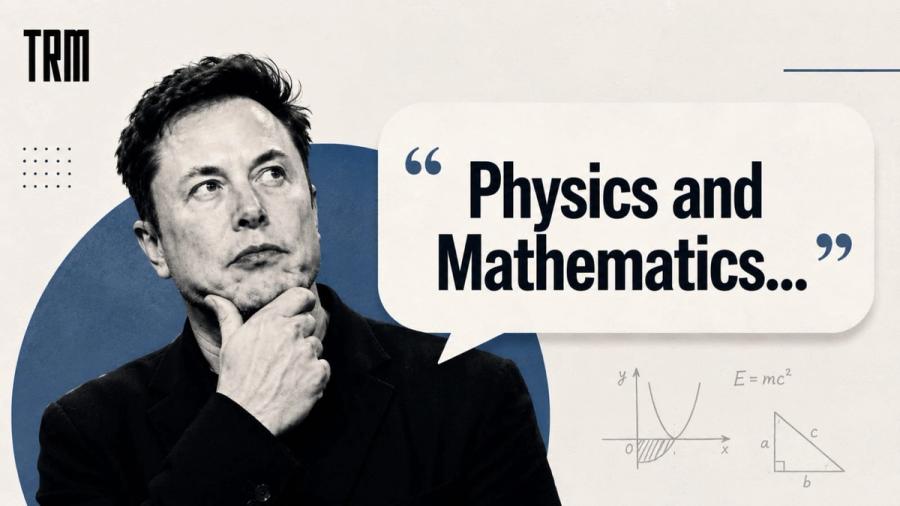
Why the Smartest People Still Recommend Physics
When AI does all the science, why do we need to study Physics and Mathematics even more than before? Why not just chill?
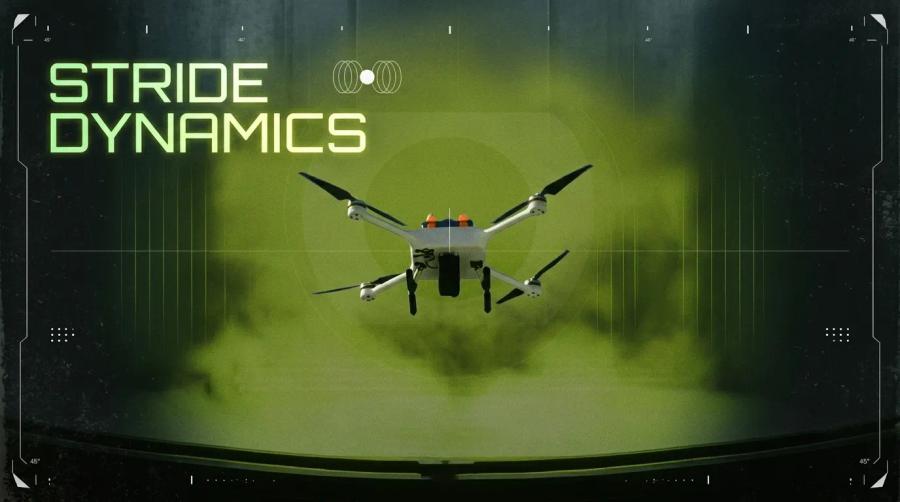
GPS Is For People Who Trust Satellites. This Rajkot Startup Has Other Ideas.
Earlier this month, Smit Shah, President of the Drone Federation of India, made an announcement that didn’t get nearly enough attention outside defense circles: India is in the middle of a $2B+ domestic drone procurement push, and the government wants indigenous solutions, not imports. That’s not a policy aspiration anymore. That’s a purchase order in the making.
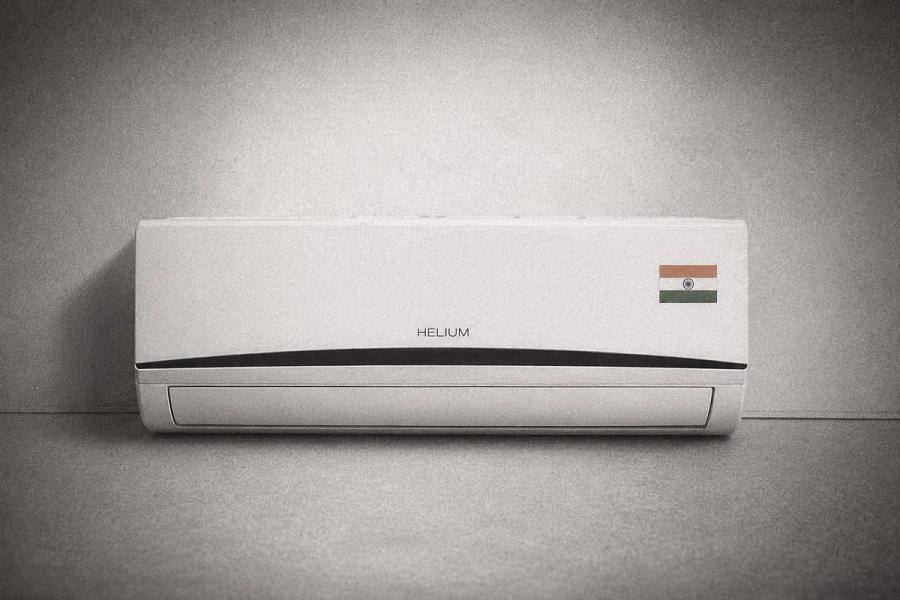
An Onion, a Heatwave, and the Startup Asking Why India Can't Afford to Stay Cool
In May 2024, Delhi recorded 49°C. Rajasthan crossed 50. The IMD issued heatwave warnings for months that had no historical precedent for needing them.